As the rich get richer, others suffer, but how this happens isn’t well known.

Economic inequality can be toxic in many ways. The poor are the most obvious casualties. More generally, entire communities can be jeopardised by the political fallout from corrupted political institutions.
These thoughts arise from reading four books that address inequality from dramatically different angles: waste, offshore finance, security, and tech platforms. Yet they have a common theme: the wealthy are indirectly causing havoc in society, and few people know about the scale of the damage because so much is done in secret. After describing the four books in turn, I’ll finish with a few thoughts about the implications.
Waste wars
Alexander Clapp’s book Waste Wars is a remarkable investigation of the afterlife of Western consumer products. Rather than countries handling their own waste, much of it is shipped to poor countries where it is dumped or deconstructed in highly risky and environmentally damaging operations.

Clapp uses personal stories, including his own role, to motivate the topic, then delves into history and politics. The book has four main parts: (1) landfill in Guatemala; (2) e-waste in Ghana; (3) shipbreaking in Turkey; (4) plastic waste in Indonesia.
For me, the highlight of his account is the story of electronics sent to Ghana, where a toxic deconstruction takes place, for example by burning plastics to extract copper. An entire community is supported by this noxious enterprise. Exporters get around anti-dumping regulations by labelling the material as used electronics; some doesn’t work, some does for weeks or a couple of years. As a consequence, another new industry has arisen in Ghana around using workable phones to run scams, with big scores from Western dupes used, ironically, to purchase new iPhones.

Clapp tells how for decades China imported most of the world’s waste plastic, but then there was a shift. Chinese production of plastics became cheaper and in 2018 the government banned importing plastic waste, after which new destinations were found, including Indonesia.
Waste Wars is an engaging study, giving close-up views of the lives of people dealing with waste or affected by it. The vivid detail almost obscures the big picture, a form of neocolonialism — exploitation of former colonies — hidden from Western publics, that makes recycling of consumer goods seem responsible, so long as the end of the waste journey is invisible.

Alexander Clapp
There doesn’t seem to be much organised resistance to the waste trade. Some governments have legislated against it, but exporters can get around the rules, and some entrepreneurs (for example, in Turkey) seek waste.
In summary, Clapp exposes the waste trade and its huge damage, and how it maintains a façade of responsibility. As he says, the driver is continually expanding production.
Offshore
The Cayman Islands are known as a place to have a bank account if you want to hide a large amount of money you don’t want others to know about, and don’t want it to be taxed. It’s called a tax haven. Switzerland is another favoured banking destination for ill-gotten gains, holding billions of dollars stolen by dictators from the countries they rule.

Tax havens don’t get a lot of media attention, but there are some penetrating studies. By far the most engaging that I’ve read is Offshore by Brooke Harrington. An academic, she decided to learn about how wealthy people hide their cash by training to become a wealth manager. She did this because she knew something important about the wealthy: they don’t handle their own finances. Through discussions with experienced wealth managers, she learned about the secretive domain of tax havens.
But she prefers the term “offshore finance,” because avoiding tax is just one of many functions of having money that others can’t access. It’s a convenient way of keeping your cash when going through a divorce or avoiding laws on campaign finance and environmental control. (The Tax Justice Network prefers the name “secrecy jurisdiction.”)
There are many places where you can obtain this sort of protection. It used to be that the prime destinations were small jurisdictions like the Cayman Islands, but now the biggest harbour for illicit money is — I never would have guessed — the US.

Brooke Harrington
“Offshore” really just means foreign. You live in one country and abide by its laws, including tax law, but you keep a stash of your money in a bank in another country where it’s taxed at a low rate, or not at all.
Harrington says that offshore funds are huge, amounting to maybe 10% or more of the world’s wealth. And, she emphasises, this is an unproductive stash of funds. It’s not like an investment used to foster economic activity, but rather an extraction of potential investment from the world’s economy, money that might otherwise be spent on housing, healthcare and the like.
Harrington says that offshore operations are not capitalist, but rather closer to feudal. The wealthy people who hide their money feel they are entitled to have their money, avoiding tax and regulatory scrutiny, while benefiting from services such as roads and schooling. Their sense of entitlement is so great that some think that laws and mutual-obligation expectations simply don’t apply to them. “Offshore finance survives and thrives based on a logic of predation rather than capitalism.” (p. 40)
Secrecy is crucial to offshore finance. Without it, the whole operation would be in jeopardy. “Secrecy then enables the perpetrators to avoid legal and financial accountability.” (p. 42) Indeed, offshore accounts might be called secrecy accounts. Harrington notes that lists of the world’s wealthiest individuals are inaccurate, because there are so many billionaires whose assets are secret.
“Thus, government and corporate leaders who appear in the offshore leaks should be understood not just as corrupt people who got caught: they are elites in revolt, engaged in a political project of refusing obligation to the societies that allowed them to become wealthy and powerful.” (p. 53)
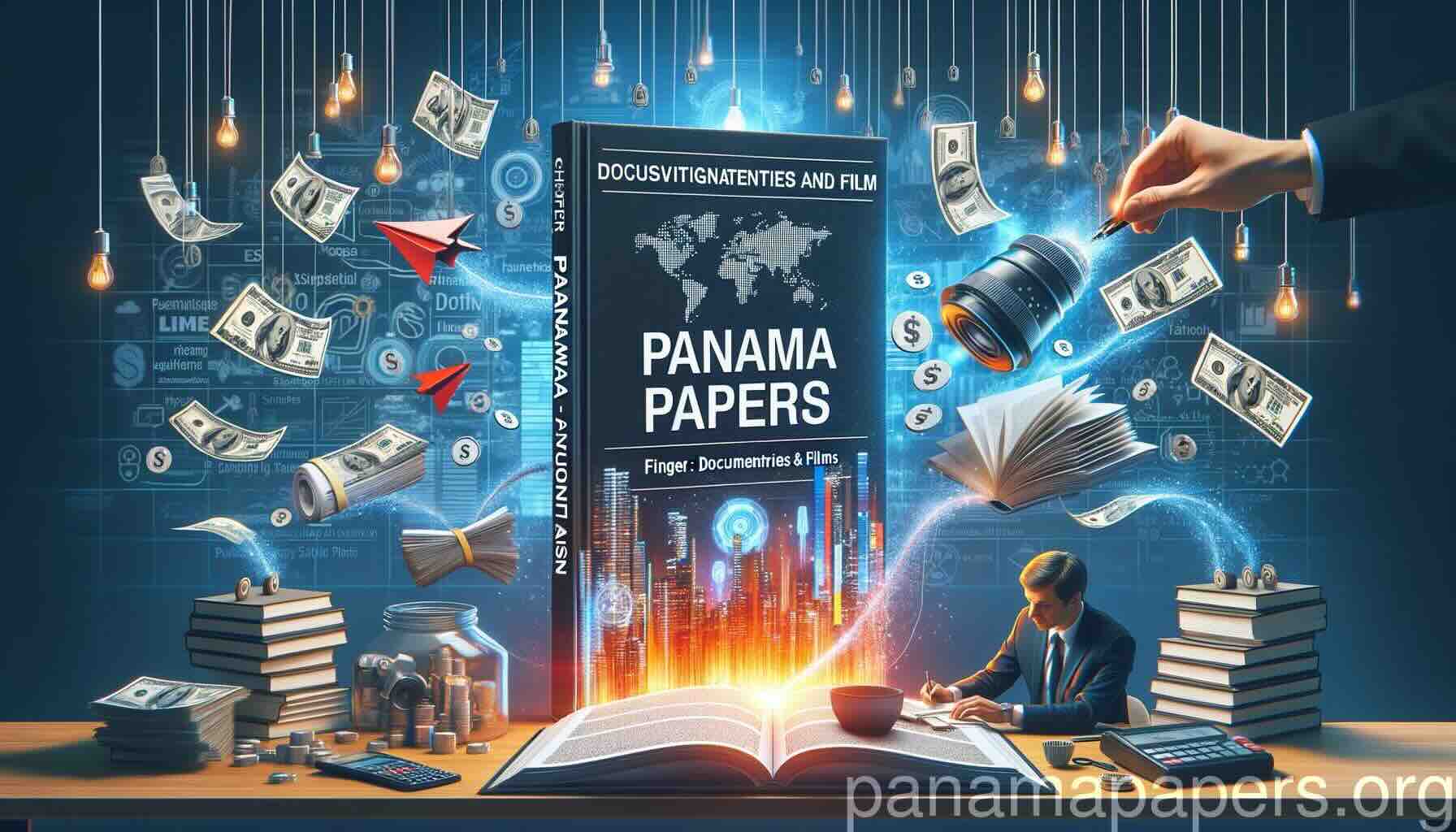
In 2016, a leaker released a stash of documents called the Panama Papers, comprising 2.6 terabytes of data and 13.4 million documents from the Panamanian firm Mossack Fonseca, showing accounts by many prominent individuals. This release generated headlines at the time, and later there were similar exposes with the Paradise and Pandora Papers. Despite these disclosures, Harrington says, much about offshore finance remains unknown.
Harrington likens offshore finance to colonialism, with the difference that colonialism operated in the open, whereas offshore finance operates secretively, all the better to prevent “the revolt of the colonized” (p. 107). The colonised here refers to ordinary taxpayers who contribute to society and are exploited by the wealthy who avoid their obligations to the common welfare.
Losing control
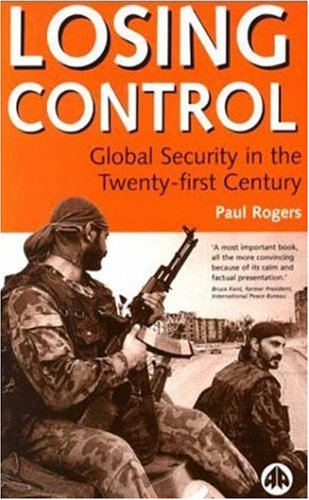
Peace researcher Paul Rogers wrote the book Losing Control, first published in 2000. It is an analysis of global security, remarkable in anticipating future events, notably the 11 September 2001 terrorist attacks. Rogers identified several key developments that drive military and security politics. First is the growth of economic inequality, exacerbated by the rise of neoliberalism. Second is environmental constraints on growth, especially climate change, which means that economic growth will never be able to bring Western-style affluence to all the world’s population. Third is a Western military paradigm based on controlling challenges by force, rather than addressing the driving forces behind discontent, namely inequality combined with resource constraints.
Add to this Western welfare systems, which had served to pacify working-class populations excluded from the massive economic growth that mainly benefited the wealthy. These systems are highly attractive to the excluded in less affluent countries. Finally, to top it off, there is asymmetric warfare. It has become ever more difficult for Western militaries to defend against adversaries using non-standard tactics such as suicide bombings.
Rogers anticipated the rise of anti-immigrant politics in the West, as government leaders stigmatised immigrants as the source of problems, rather than their own policies that exploited people around the world, causing resentment and desperation.

Paul Rogers
Losing Control has gone through four editions, the latest published in 2021. (I commented earlier on the third edition.) Rogers continues his careful examination of security developments, showing the power of his analysis for understanding and anticipating trends. His central concern is growing inequality in the face of environmental constraints as central drivers of challenges to Western hegemony, lamenting that these challenges will continue as long as the Western response is trying to repress them rather than address the drivers. As he puts it, there is a
“widening socio-economic divide resisted by an increasingly knowledgeable but marginalised majority of the world’s people, environmental constraints set largely by the impact of human activity on the global environment, and a marked trend by elite communities to address these issues by seeking to maintain the status quo, through military force if necessary.” (p. 171)
The age of extraction
Years ago I commented on Tim Wu’s book The Attention Merchants, and hence was keen to read his latest book. It’s about tech platforms like Amazon, Meta and Google. The title is The Age of Extraction, and his argument is that today’s tech company behemoths are extracting enormous amounts of money from their operations. They are akin to monopolies.

Consider Amazon, where you can buy just about anything, often at a lower price and with a quicker delivery than from any other seller. Wu says Amazon has become the modern-day equivalent of a town square, a place where shops and people congregate for mutual benefit. The town square thrived by remaining neutral to its tenants and consumers. But Amazon is different from town squares in one important way: it is a profit-seeking company. Its semi-monopoly position allows it to squeeze businesses by reducing returns to them.
Wu describes Amazon’s strategy in five stages.
- Make the platform essential by setting low prices for both buyers and sellers.
- Eliminate rivals by under-pricing or buying them.
- Replicate dependent businesses, for example printing books itself.
- Make it difficult for buyers and sellers to leave.
- Raise fees and prices, and have more ads, to capture data and attention.

This is a general strategy of big tech: grow and prevent others from growing to a large scale. A key tool is buying potential rivals. Platforms try to prevent users from leaving — that’s what matters most to them. What users do on a platform matters less than that they are doing something, because the platform always takes a cut.
Wu says that we, the users, are seduced by convenience. It’s a boring topic, but important, because it discourages exit. “To resist convenience — to not own a mobile phone, to avoid using online maps — has come to require a special kind of dedication that is often taken for eccentricity, if not lunacy.” (p. 79)
Tech platforms do not operate in secrecy. Yet, most people do not realise they are giant extraction machines, sucking money out of users and small businesses, driving competitors to the wall. It’s a sort of invisibility in plain sight, with convenience as one of the ways that users are diverted from concern about exploitation.

Tim Wu
Wu argues that there needs to be a balance between corporate power-seeking and government regulation. Today, while platforms are in ascendance, government regulation is too weak. This leads to an alarming sequence, outlined by Wu (pp. 122-124).
- Monopolies develop.
- The monopolies increase their extraction of wealth from users, creating a two-tier economy of the wealthy and the rest.
- Mass resentment emerges, driven by inequality.
- The government fails to respond to majority concerns by continuing to allow monopoly businesses to extract wealth.
- An authoritarian leader comes to power, promising to address common concerns.
The end point of growing inequality
Wu’s sequence is alarming because it fits the pattern seen in many countries with the rise of populist authoritarian leaders. Rather than address the underlying causes of discontent and resentment, especially inequality, authoritarian leaders find scapegoats. Immigrants, minorities and dissidents are good for this purpose.
Harrington, in her study of offshore finance, says that it’s possible that the entire enterprise may correct its own injustices, but that “Another possible trajectory is more common historically: many systems that create extreme imbalances of power and wealth simply self-destruct.” (p. 116)
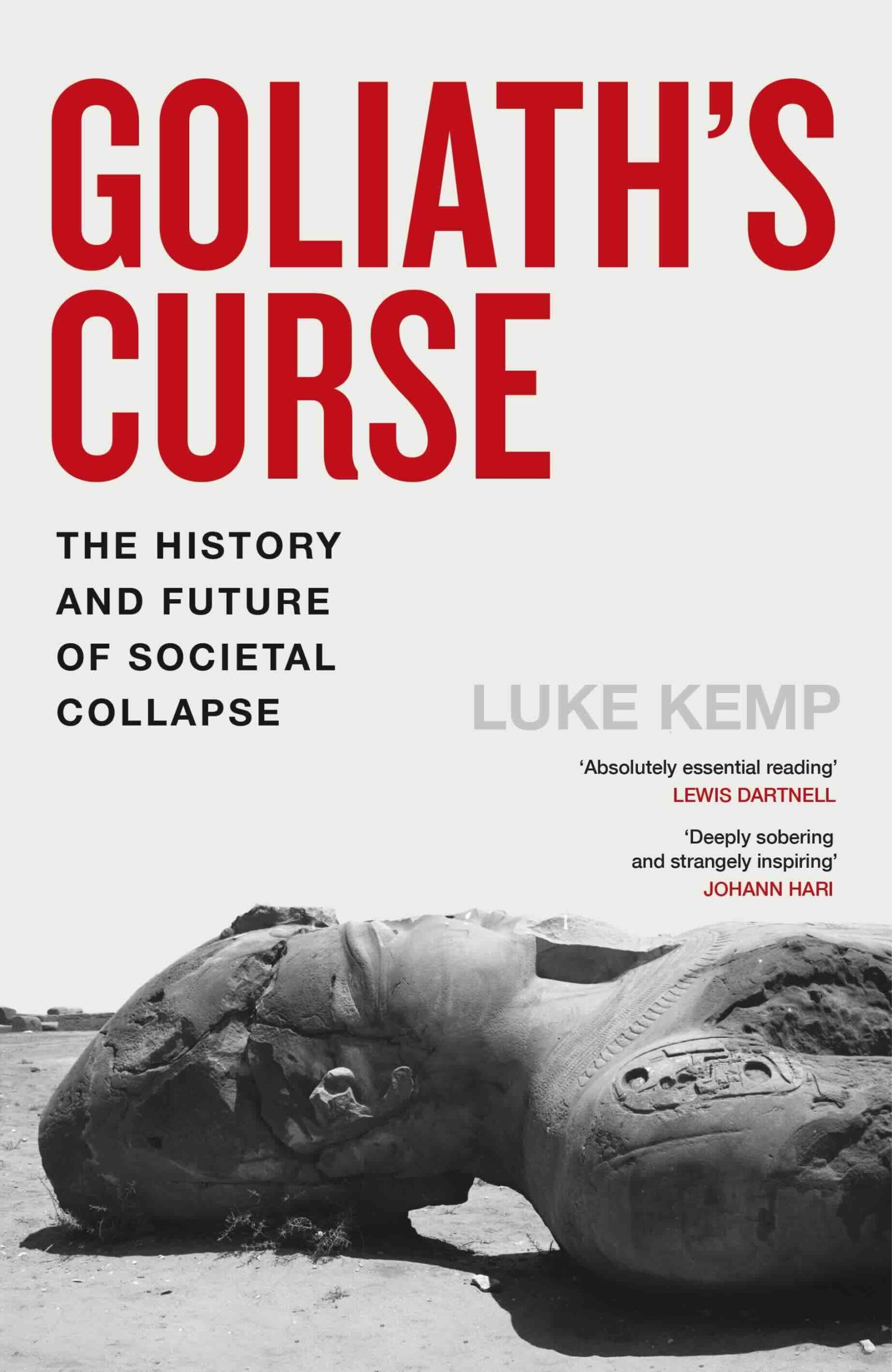
Then there is Luke Kemp, author of the massive and crucially important study of societal collapse titled Goliath’s Curse. Kemp examined dozens of states and empires, which he calls Goliaths. They operate by extracting wealth from populations to serve a small ruling elite. However, Goliaths have a weakness: growing inequality. Combined with power struggles among elites and external shocks like natural disasters, Goliaths always collapse eventually. (Afterwards, paradoxically, most people are better off.) Kemp says the world is now in the grip of a global Goliath, which means the collapse will be global.
Inequality tactics
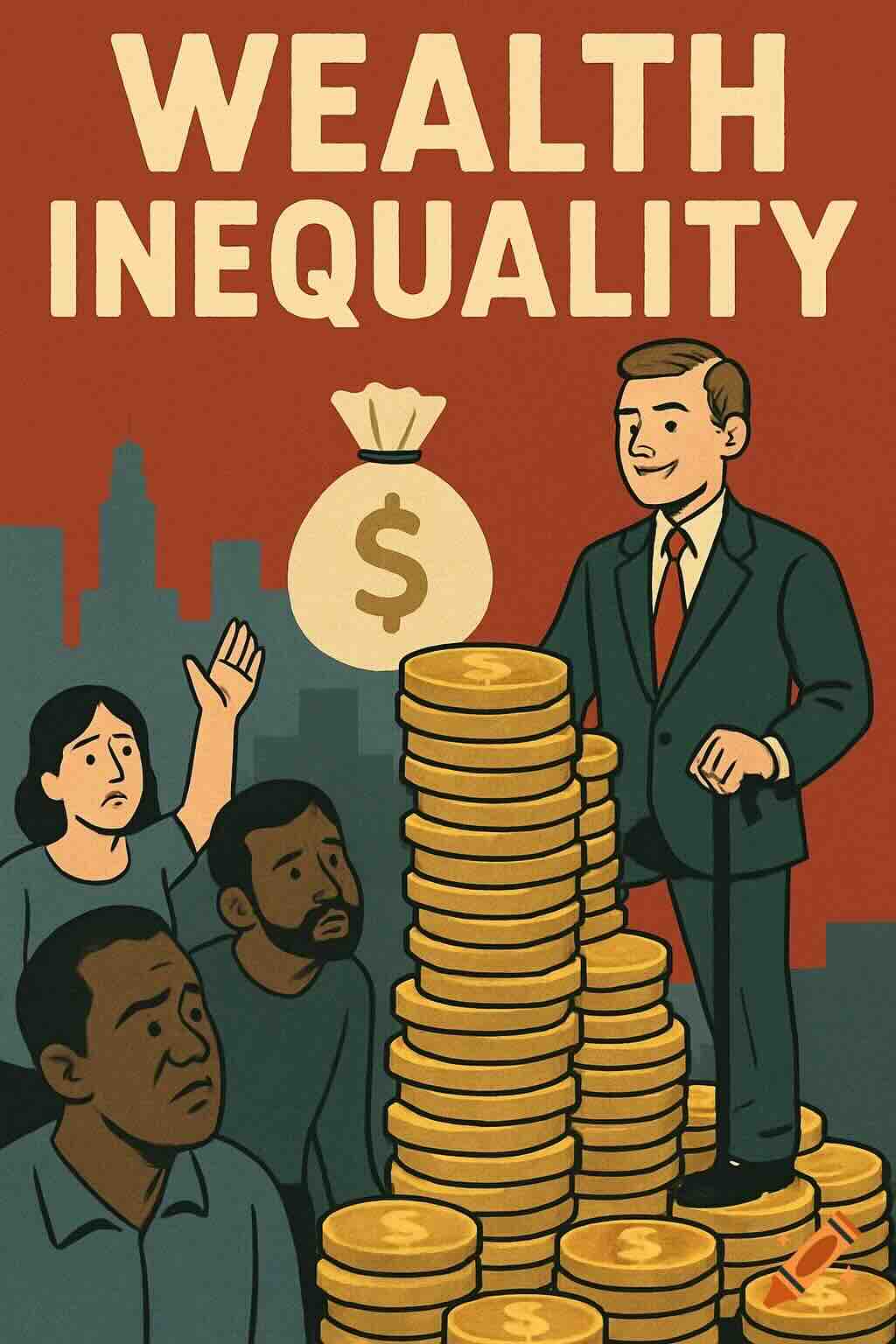
Some years ago, my colleague Susan Engel and I wrote an article about the methods by which the scale of economic inequality is hidden or justified. We discussed five methods that reduce the outrage that might be generated by awareness of inequality.
- Cover-up. When people aren’t directly aware of inequality, they are less upset about it. Gated communities, for example, prevent mixing between the rich and the poor.
- Devaluation. Poor people are called lazy, unambitious, incompetent and ignorant.
- Reinterpretation. Inequality is said to be an inevitable part of economic growth, which will improve everyone’s situation.
- Official channels. Government policies support the wealthy.
- Intimidation and rewards. Those who challenge inequality — such as tax-haven whistleblowers — may be threatened or attacked. Those who support the wealthy are rewarded.
The basic idea is that many people are angry or disgusted by extreme levels of inequality, of contrasts between the wealthy and the impoverished, so a range of methods serve to prevent such reactions. The four books discussed here reveal some of these methods as applied to specific cases.

Waste Wars. The waste trade should be a scandal, but most people don’t know anything about it, so cover-up is the key method of reducing public outrage. As well, affluent people are lulled into believing they are doing the right thing by recycling their waste.
Offshore. The key method by which offshore finance, and its contribution to extreme inequality, is through secrecy.
Losing Control. Wars and anti-terrorism alarmism divert attention from inequality and resource constraints, which are driving revolts from the margins. Immigrants are blamed for social problems, a reinterpretation technique.
The Age of Extraction. Platforms like Amazon extract money and data from ordinary people and put it in the hands of the wealthy. The level of extraction is not obvious, and buyers are attracted by price and convenience.
What to do?
Challenging economic inequality is not easy. The wealthy have a great deal of power and can use it to perpetuate their advantages. Nevertheless, they are vulnerable, because, as Harrington says, offshore finance “conceals both the real extent of economic and political inequality and its source: a radical and deeply unpopular agenda that is not just anti-democratic and opposed to the rule of law but also surprisingly anti-capitalist.” (p. 38)
Challenges can be classified as counters to the five methods listed above.
- Exposure. Revealing the extent and impact of inequality.
- Validation. Treating the poor with respect, and making connections with them.
- Interpretation. Presenting data on inequality and its damaging effects, countering lies and deceptive framing.
- Mobilisation. Taking action against inequality, like the Occupy movement, and in support of greater equality, like the free software movement.
- Resistance to intimidation and rewards. Continuing to speak out despite threats, and refusing to support exploitation by the wealthy.

All four books serve as exposés, fitting the categories of exposure and interpretation. The challenge is to put inequality on the agenda as a key driver of today’s social problems.
Brian Martin
bmartin@uow.edu.au
Thanks to Susan Engel for useful comments.