Getting attacked in the media is no fun. Ten years ago, it happened to me, beginning with a front-page story in The Australian. So when I heard about a new book titled Getting Murdoched, I just had to read it. It helped put my experiences in perspective.
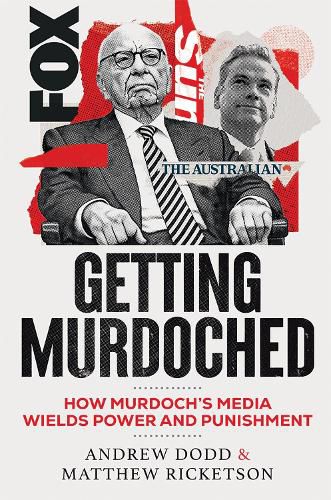
Rupert Murdoch is one of Australia’s highest-value exports. From his father, he inherited a major Australian media company, and built it into something far bigger and more powerful. Called News Corp, or News for short, it acquired newspapers and television channels, becoming the dominant mass media presence in the country. But Murdoch wanted more, and expanded to Britain and the US. To enable US operations, he took out US citizenship.

Rupert Murdoch
This is the economic side of the picture. The other side is ideological. Murdoch’s media outlets are well known for their highly partisan, right-wing politics. This political slant is combined with appeals to prejudice, in a style designed to highlight scandal. Many see it as a degradation of journalism.
Occasionally, I leaf through Sydney’s daily newspaper The Daily Telegraph. It is notable for being relentlessly critical of the Australian Labor Party, trade unions, indeed any progressive cause.
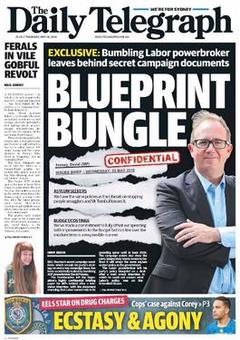
On top of that, Murdoch’s media often go on the attack, targeting individuals who are emblems of what they oppose. Typical targets are women, human rights campaigners, Indigenous figures, and anyone who tries to challenge the Murdoch media. The stories of these attacks are told, with great care, in Getting Murdoched. There are many books about Murdoch and Murdoch media; this one focuses on their targets.
The chapters in the book cover the main targets: progressive political figures, foreigners, critics of mindless patriotism, women, queers, “scumbag celebrities,” those who get in the way of Murdoch’s ambitions, climate campaigners, and finally “people who haven’t suffered enough.” It’s quite a roll call of attack victims, and the stories aren’t pretty.

Lachlan Murdoch
Attack stories
Here’s a sample of the many cases described in Getting Murdoched.
* Anita Heiss, a Wiradjuri woman, was attacked by Andrew Bolt in Melbourne’s newspaper the Herald Sun as being too white, as being a “political Aborigine.”
* Sarah Schwartz, “a young Jewish lawyer who has campaigned against Israel’s human rights abuses,” was the subject of a contrived controversy.

Sarah Schwartz
* Scott McIntyre, a journalist at Australia’s Special Broadcasting Service, tweeted comments about myths about Anzac Day, a public holiday commemorating Australian and New Zealand troops. After a pile-on by Murdoch media, he was dismissed.
* Julia Gillard, Australia’s first female prime minister: “The Australian waged an unremitting campaign over many months about an ancient, inconsequential issue from her days as a lawyer doing pro bono work for a union in which her then boyfriend was an official.”
* Trans influencer Dylan Mulvaney was engaged to promote US beer Bud Light. Fox News mounted a campaign leading to a national boycott.
* Welsh singer Charlotte Church sang at Rupert Murdoch’s third wedding. Nevertheless, for years she was “hounded by the British tabloids”; Murdoch journalists hacked her phone.
* Over six years, The Australian published numerous articles, mostly hostile, about individuals who had criticised the newspaper: Julie Posetti (35), Margaret Simons (138), Robert Manne (269), Julian Disney (128) and Paul Barry (117).

Julie Posetti
* British climate scientist Michael Mann was vilified by Fox News, reflecting the Murdoch media’s persistent support for climate sceptics.
* Bob and Sally Dowler’s daughter Milly went missing in 2002, in Surrey, England. Journalists at Murdoch’s News of the World hacked Milly’s phone and ran stories drawing on private information.
Methods
Dodd and Ricketson tell about the attacks in a clear, straightforward way. If you had heard about some of them before — for example, the media harassment of Yassmin Abdel-Magied, causing her to leave Australia — the treatment here provides a convenient summary.

Yassmin Abdel-Magied
Quite a few are likely to be unfamiliar. The authors are meticulous in their writing, as they need to be to avoid being sued for defamation.
In the beginning, they summarise the four main Murdoch-media attack tactics.
- Publish many articles contesting every possible point, so the target’s ideas are swamped.
- Attack personally, repeatedly, without compassion.
- Ignore critics of the Murdoch media, even when they are newsworthy.
- Continue asserting things shown to be false.
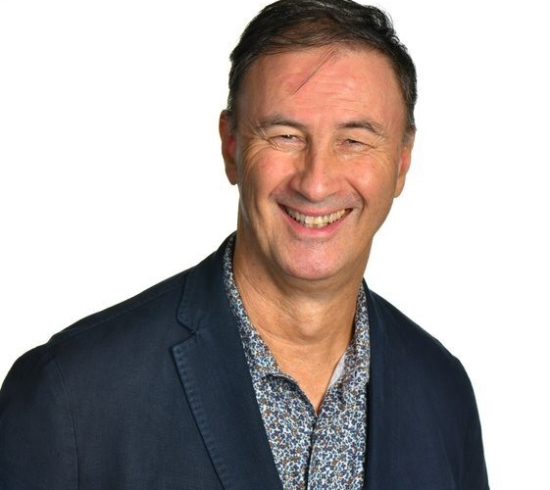
Matthew Ricketson
Dodd and Ricketson tried to contact the subjects of their stories, to learn about the personal effects of being murdoched. Many were willing to comment, and for most the experience was unpleasant, often highly traumatic. Some of the targets were personally tough, but it’s not just a matter of refusing to give in. The trouble is that the target’s family, friends and colleagues are reading the stream of bile, and some of them are influenced by it. Furthermore, some attacks are against family members.
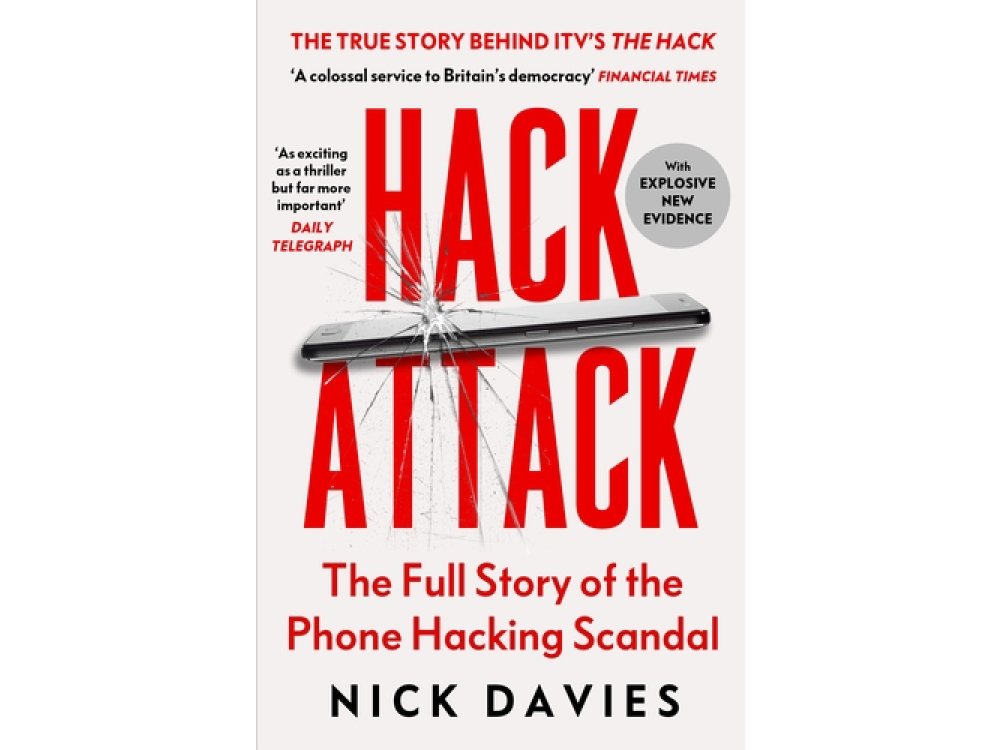
Dodd and Ricketson save the most horrible story to the end: the widespread hacking of people’s phones in Britain, including royalty and the parents of missing children. When this was exposed, it caused widespread revulsion.
What to do?
Murdoch’s media empire is large, profitable and influential. When you’re a target of a ruthless, pitiless media onslaught, what can you do? That’s an individual decision. The bigger question is, what can be done about a rogue media organisation, one that has forsaken the classic media principle of holding the powerful to account, instead serving itself and the powerful by attacking those less powerful? Dodd and Ricketson examine options, few of them promising.

Andrew Dodd
They conclude that governments can’t be relied upon to address abuses, because News has too much leverage. Courts can’t be the solution, because News has more money and staying power, and is willing to spend millions to make plaintiffs go away.
Complaining to media regulators is usually a waste of time. In Britain, the chair of the Independent Press Standards Organisation testified that of 8000 complaints received, just one was upheld. Toothless indeed. If only people knew, they wouldn’t bother.

There is some hope. Journalists from other media organisations can challenge Murdoch media. News constantly attacks the ABC, in part because ABC journalists expose News bias.

Dodd and Ricketson propose a strategy: build a coalition to push for regulation (including of social media), support independent media, and encourage media literacy. Sounds good, but who will take the lead?
For individuals under attack, Dodd and Ricketson note the advice given by Malcolm Turnbull, former Australian prime minister: respond to every falsehood quickly and strongly. This is contrary to the advice from many media managers to say nothing, called starving the story of oxygen. That was the advice I was given.
The Australian attacks
In January 2016, there was a front-page story in The Australian attacking one of my PhD students, Judy Wilyman, whose thesis had just been posted on the university’s website. The article’s title included a false claim.

This article triggered a wider onslaught. On the website of the newspaper, there were hundreds of hostile comments. The university’s Twitter account was swamped with criticisms. Soon there was a petition asking the government to sanction the university. A one-sided account was added to the university’s Wikipedia page. Opponents of Judy’s research, within the university, pushed for her thesis to be investigated.
While Judy was the primary target, I was a secondary target, as was the university. Over the following weeks, The Australian published a series of attack articles, but interest from other mainstream media was limited.

One of many tweets on a Twitter account set up to attack Judy, me and the university
Judy’s research had been under attack for years, so senior university officials knew there would be an attack when her thesis was posted online. We prepared. I wrote a commentary posted at the same time, anticipating the attack. I wrote a response that was published in The Australian, and a detailed analysis of the original attack article, as well as responsesto several related attack articles, putting everything on my website.
Ironically, the attack turned out to have some positives. It triggered great interest in Judy’s thesis, which was eventually downloaded tens of thousands of times, far more than any other thesis at the university. For me, as a researcher into suppression of dissent, the attack offered a wealth of material for social analysis. The university administration, which defended its procedures and did not buckle, showed its commitment to academic freedom.
This was just one experience of being murdoched. If there are any lessons, they are: (1) be prepared for an attack; (2) cultivate allies, especially your employer; (3) respond carefully to every claim; (4) use the opportunity to gain greater attention to your views.

Unfortunately, few targets of murdoching are in such a good position. The attacks are often unexpected and unending, potential allies fade away, and the experience is so distressing that responding is emotionally difficult.
If you are a potential target, for whatever reason, read Getting Murdoched and do what you can to prepare. And whenever you’re aware of someone else being savaged by the Murdoch media, or other media for that matter, reach out to support them. In the midst of an attack, messages of sympathy are greatly valued.
Brian Martin
bmartin@uow.edu.au
Thanks to Jungmin Choi and Kelly Gates for helpful comments.