Should it be a big deal if computers become better at human mental achievements? So what if computers have better memories, process information more logically, are creative and display emotions?
Throughout recent history, machines have outdone one human capacity after another. Until two hundred years ago, humans (on foot or horseback) could travel faster than any machine. Then came the train, a self-powered vehicle that could go faster, and later there were cars. This is not to mention machines able to do things that humans can’t do at all without devices, like flying.

Humans can become highly skilled musicians, with amazing capacities for performing difficult compositions. Then came recordings of top musicians, tweaked to remove mistakes, the result being a sound more accurate and pure than any human can produce.
Humans can be very good cooks, and some cooks are celebrities. Yet for much everyday cooking, machines can produce greater quantities of uniform quality food than just about any human. Think corn flakes and sliced bread. In supermarkets, people buy machine-produced food, with little home produce available.

Chess is a complex game, and grandmasters can play at phenomenally advanced levels. But in 1997, a computer beat the world’s best player.

The game of go is even more challenging. A computer beat the world’s top go player in 2016.

Today, the frontier is human thinking, with computers becoming better and better at many capacities, such as composing text, creating pictures, recognising faces and analysing data. Defenders of human superiority point to areas where computers remain deficient or are prone to error. However, as AI continues to improve, human superiority will be harder to defend. Should we worry?
Humans keep striving
Even though machines can do better than humans in many domains, this hasn’t meant that humans give up striving and competing — with each other.
Athletes continue to train to extraordinary levels, trying to excel. In competitions, winning is prized. In running and swimming, speed and endurance are the goals, and it doesn’t matter that machines can travel on land and sea much faster than humans. Indeed, that comparison has almost been forgotten.

Elite musicians continue to devote thousands of hours of practice to becoming the most outstanding performers possible, and audiences attend concerts to hear talented soloists. That recordings and synthesised music can outdo most humans is beside the point. Audiences don’t flock to concert halls to listen to recordings.

People continue to play chess, and some devote intensive study and practice to become extremely good, even to the level of grandmasters, seeking to defeat other humans. Likewise for the game of go.

People continue to train their minds to extraordinary levels, for example in memorising long sequences of numbers, even though computers can do the same thing with ease. People continue to learn large numbers of facts, displaying their skills on television shows where memory feats and quick responses impress audiences.

In summary, even in domains where machines are superior, people keep striving to become good, better and extraordinary. But only some people.
Downsides of machine superiority
Although some people continue to exert their bodies, most rely on machines to get around and to help with washing, digging, building and gardening. Rather than use muscles, it has become commonplace to rely on labour-saving devices. The result: lower levels of physical fitness and increasing levels of obesity. Humans are tempted to rely on machines rather than their own bodies, and physical and social infrastructures — housing, roads, jobs — make physical activity something you have to go out of your way to do. Rather than walking or cycling, people drive, including to gyms and playing fields where they can get some of the exercise removed from daily life.

Machines can reproduce music at a higher quality and reliability than humans can perform it. Although some people train to become musicians of the highest level, most have become listeners. With high-quality music on demand, playing an instrument yourself can seem less appealing because of the contrast between self-produced sounds and the audio perfection everywhere around. Amateur music continues to be an important activity, but only for a minority. 
Chess playing has perhaps been affected less by the advent of superior computer performance, because it’s now convenient to test and develop one’s skills by playing against the programme.
Machines that simulate thinking, namely AI, are the current anxiety, with alarm about massive job losses, surveillance and disaster from rogue AI. More prosaically, there’s a problem with widespread reliance on AI: people’s thinking skills suffer. Students aren’t learning to think for themselves, even to answer questions or write an essay. When AI becomes a widespread crutch, here’s a prognosis for human thinking capacities: decline for most people, while some continue to train for mental excellence.

In all these areas, machines seem to be beneficial, easing the need for bone-breaking toil, offering high-quality music on demand, and offloading tedious mental demands. But in these areas, there’s a downside: many humans become lazy, because effort is no longer required. As a result, their abilities to use muscles, create music and think go into decline.
The fairness test
Even after machines are able to outdo humans in specific domains, some people continue to refine their skills to achieve excellence. And when assessing excellence, there is a crucial test: no cheating by using machines.
In competitive sports, cheating is a cardinal sin. In some long-distance running races, competitors cheat by getting a ride for part of the race. Very bad! So far as drugs are concerned, anything that enhances performance is banned. Although some athletes have advantages through training and other support, the appearance of fairness is rigorously policed. The fact that machines can do better is irrelevant to the sporting contest. Humans only.

In public musical performance, technological aids are a no-no. A concert pianist would never contemplate using a synthesiser to help in difficult passages. In some compositions, recorded or synthesised sound is part of it. But for classical pieces, performers expect and are expected to do it all, authentically.
In chess competitions, covertly using a computer for assistance is treated as cheating. Unless computers are explicitly part of the contest, chess matches are strictly between humans.

In schools and universities, AI is causing huge headaches for teachers. How can students be encouraged to learn? Should AI be a tool for learning? While these matters are explored, one thing remains constant: students are expected to be judged by their own work. The educational contest is supposed to be fair, with every graduate producing acceptable work, on their own. It was always thus. Cheating on assignments and exams by having someone else do them has always been seen as wrong, as unfair, and so is having a machine do the work when everyone is expected to do it on their own.
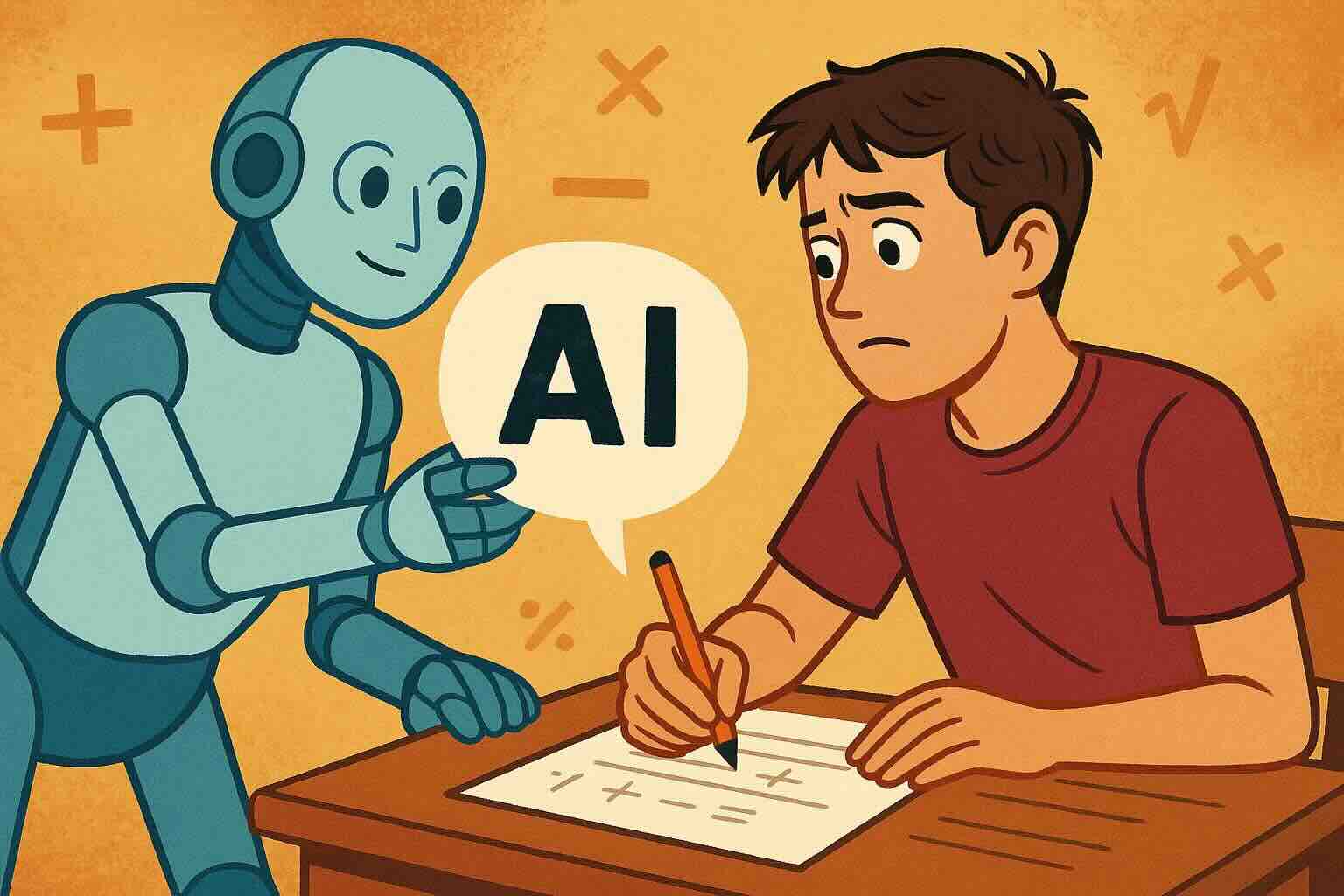
If machines can think, or create a semblance of thinking, and do it far better than humans, the concern about fairness in human-versus-human interactions is likely to continue. How this plays out remains to be seen.
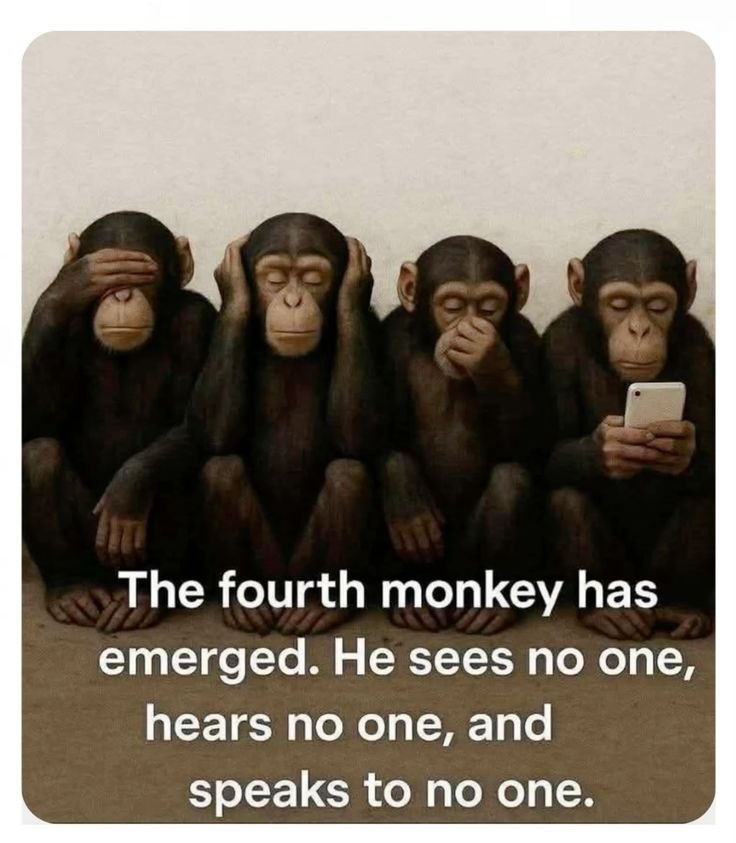
Humans are not the centre of the universe. Many of their capabilities are shared, to some degree, with other animals. And humans have constructed machines, some of which outdo humans. The downside: relying on machines often leads human skills to atrophy. This applies to the mind as well as the body.
A more important issue
Humans are their own worst enemies. Industrialisation has caused immense damage to the environment. Scientists, engineers and arms manufacturers have created weapons for torture and killing. There are alarms about the dangers from nuclear weapons and AI.
The issue should not be whether machines can do what humans can do, only better. It should be about what the machines are doing. Are they making life better, or causing damage? So, let’s worry less about machines having tremendous capabilities and more about what they are doing with those capabilities.

Brian Martin
bmartin@uow.edu.au
For valuable comments, thanks to Paula Arvela, Kelly Gates, Olga Kuchinskaya and Qinqing Xu.