In Australia, it can be risky to publish comments about another person. They might sue you for defamation.

I was first threatened with defamation suits in the 1980s, when writing about prominent advocates of nuclear power. Over the years, I learned about options for publishing on sensitive topics while reducing the risk of legal action.
Because whistleblowers are often threatened with legal action for defamation, I wrote a leaflet titled “Defamation law and free speech,” with a lot of help from others, including a leading defamation barrister. Since it was posted online in 1996, I have received hundreds of queries from people who want to publish but are afraid of being sued. Nearly all of these are low-profile cases that never come to public attention. I’m not a lawyer and mainly comment on options before cases get to court.

Say it carefully
The first step in defamation-proofing is to clean up your language, getting rid of general claims, and instead giving specifics that you can back up. Instead of saying “He’s a corrupt bastard,” you might write, “He received a payment of $50,000 from the owners before approving their development,” or “He was recorded shouting at a teenage employee.” This sort of advice was an important part of “Defamation law and free speech.”
And you’d better have evidence to back up every statement. In court, the defendant has to prove the validity of every contested statement. Instead of innocent until proven guilty, defamation laws say you’re guilty until you can prove you’re not.
Legal advice?
One option is to find a lawyer knowledgeable about defamation matters and ask them to check what you’ve written. There are two problems. Lawyers are expensive, and most of them are cautious, rightfully so. They are likely to recommend omitting anything that might offend the people you write about. You might end up saying almost nothing.

If you’re a journalist and work for a large media company, you’ll have lawyers on tap to check what you’ve written. Even better, the company’s lawyers will be there to defend against legal actions. Most of the people I advise are not journalists and don’t have large cash reserves. They don’t want to spend a lot — but they do want to publish.
Send a draft?
Before publishing anything, it’s valuable to obtain comments on drafts of what you’ve written. This can help improve your expression and avoid mistakes. When your text is potentially defamatory, extra care is needed. You might be sued over the draft.

Once, when a colleague was causing problems, I wrote a short account of his actions. I wanted others to read it but not give it to him, so I met with individuals in their offices and gave them a paper copy to read on the spot, asking for their comments and suggestions, taking back the copy afterwards. This alerted them to what had been happening in a careful way without releasing the document.
Another option is to send copies by email, personalised. For a copy to Margarita Snell, in the header of the document I write “Draft, 4 January 2004, not for quotation or circulation. This copy for Margarita Snell only.” Then I make a pdf of the document and send it. If Margarita sends it to someone else, they will see the header on every page. If I were seriously worried that Margarita might remove the header, I wouldn’t send her the pdf.
Dating your document is crucial, so there’s a record of when you created it. If it’s a draft and you later make corrections, you need documentation of the creation date of each version. Probably you’ll never need to prove when you created it, but it’s a good practice anyway. Sometimes you can be threatened with legal action over something you didn’t think was a problem.
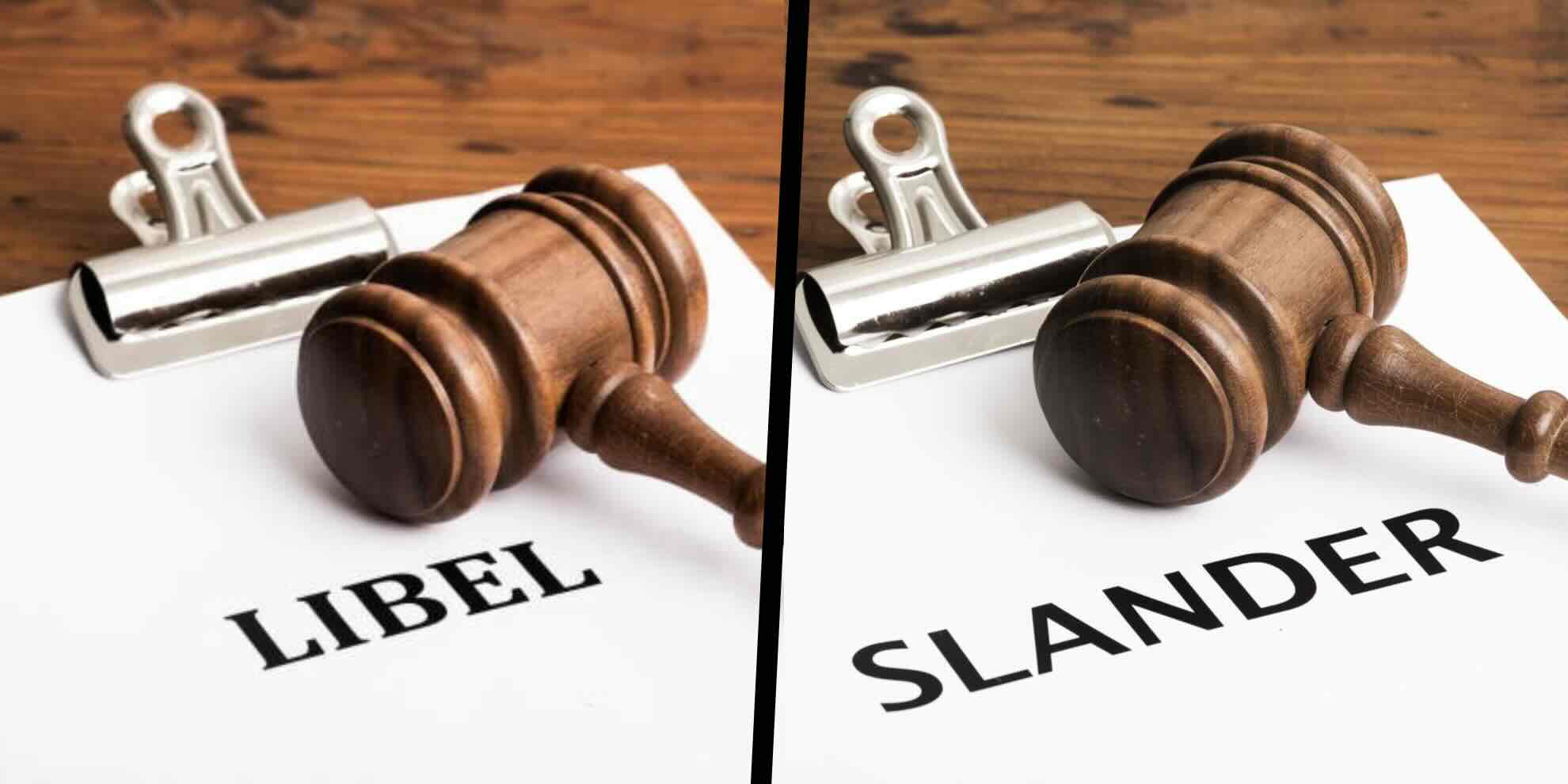
Libel and slander are two forms of defamation
In 1992, John Wright, a Sydney paediatric surgeon, contacted me. He wanted to write about his dismissal from the hospital where he worked. Preparing to post his story on my website was a delicate matter. Several doctors who had been his colleagues might have sued John as the author and me as the publisher. I mailed a draft of John’s account to each of them, saying, “I would appreciate any comment you may have to ensure the accuracy of the story,” and waited for responses. One made a specific request. A few responded with comments but no requests for change. One offered a general attack on John. Most didn’t respond at all. What to do?
The general rule is to address each comment carefully and make changes when you think they are warranted. If you’ve made a mistake, fix it. If you’ve made a claim, and someone contests it, and you don’t have documentary evidence to back it up, then remove the claim or modify how you’ve expressed it.
The general attack on John wasn’t too worrying. It came from one of John’s opponents, but didn’t point to any false statements. No need for changes. After publication, no one sued.

Even if you send a draft and make changes based on comments, you could be sued later. Also, if the other person didn’t reply, you could be sued. But it’s less likely. A judge might ask the plaintiff, “Why didn’t you take the opportunity given to you to address defamatory comments?”
One thing you need to know is that it’s safe to send defamatory text to the person you’re defaming. You can write to someone, “You’re a lying, thieving idiot,” and there’s no risk of them suing for defamation. It’s only when you say this to someone else — verbally or in writing, in a text message or picture, whatever — that you open yourself to legal action. Of course, it’s seldom a good idea to send someone an abusive message. It’s far better to be as polite as possible. The more you seem to be rational and public-spirited, the harder it will be for the other person to discredit you.
In summary, the advantages of sending a draft to people who might sue are that you can improve the accuracy of what you write and reduce the risk of being sued.

Ben Roberts-Smith damaged his reputation by suing
Sometimes, though, it’s better not to send a draft. You might want to surprise them. If they know about your text, they might apply to a court to prevent publication, put pressure on your employer, or make damning comments about you on social media, prejudicing your audience before they hear your viewpoint.
To decide what to write and whether to send a draft, you need to have a sense of the other person’s thinking and behaviour. Are they rational or driven by emotion? If they are driven by emotion, they might sue even though they have no chance of success, just to cause you pain.
Assess your vulnerabilities
Usually, you want to avoid legal action, because it’s expensive even if you win, chews up vast amounts of your time and energy, and can be incredibly stressful. Relax – a bit – because if someone threatens to sue you, most likely nothing further will come of it. Many threats turn out to be bluffs.

The next step is that you might receive a letter from a solicitor, called a letter of demand or a concerns notice. If you’ve already published comments, the letter might ask for a retraction and apology, and a payment. If you haven’t yet published anything, it might threaten legal action if you do. Even when you receive a letter like this, usually it doesn’t go any further. But sometimes you receive a writ, a court document initiating legal action. That’s more serious and you should seek legal advice. If you haven’t before, it’s time to learn more about defamation law.
But even when you receive a writ, it’s unlikely you will end up in court. Many cases are dropped by the plaintiff. Others are settled.
It’s unlikely that you ever want to get this far. Maybe you’re wealthy and don’t mind losing a lot of your money. Otherwise, going to court is no fun, and often only the lawyers come out ahead.
However, it’s good to be prepared for the worst, so you can make sensible decisions about risking legal action. How much money do you have? Can you afford to lose it? Are others, for example children, dependent on your support? The more you have to lose, the more cautious you need to be.
Ironically, you are best placed if you have few assets. If you lose in court, you could go bankrupt, but the person who sued you will get little or nothing because you can’t pay. That means they should be more reluctant to sue, because it’ll cost them a lot of money with little chance of getting any of it back.
Plan ahead
If you think you’ll be at risk of being sued, one option is to divest yourself of assets, so you’re a less attractive legal target. For example, you can put your house in your partner’s name, give your savings to a trusted friend who will help you when needed, and otherwise limit your financial vulnerability. You need to do this well in advance, several years, otherwise it might seem you are trying to avoid paying a specific debt.
Another option is to find someone to speak out on your behalf, to be the author of your damning claims. Who would want to take this risk for you? Ideally, it is someone with no assets and little income, perhaps living on a modest pension. Or it’s someone living in another country who cannot easily be affected by a legal action in Australia.

Bruce Lehrmann hurt his reputation by suing
Prepare for backfire
Defamation law is supposed to be about protecting people’s reputations. The idea is that harming someone’s reputation by making unfounded claims will be penalised by payments, and that the risk of a defamation suit will deter people from making such claims.
The trouble is that defamation law doesn’t work well to protect reputations, and sometimes suing for defamation can hurt your reputation — it can backfire. Imagine that a major newspaper publishes an article about you filled with false and misleading claims. So you decide to sue the newspaper. Big problem. The newspaper now publishes article after article about every stage of your legal action, recounting the original defamatory claims each time, which it can do safely because it’s reporting factual material. Even if you win in court (very unlikely unless you have plenty of money to run the case), your reputation is trashed by the publicity. That’s what’s happened in several high-profile cases, like solicitor John Marsden who won in court but further ruined his reputation.

John Marsden
If you’re sued for defamation, you can turn this process against the suer by publicising everything that happens. You also need to publicise your good deeds and prestigious supporters, interpret the suit as censorship, and continue despite the danger. If you have a lawyer, you’ll need to ignore their advice not to say anything in public.
When you’re sued, it’s counterintuitive to publicise it. The common reaction is to bunker down and prepare a legal defence. Nevertheless, a strategy of publicity can be potent. Sometimes it’s enough to make the suer back down. If they realise what’s happening — namely, that their threat to sue is actually harming their reputation — they may cut their losses by not proceeding.
Trying to make legal action backfire is a risky strategy, but extremely potent when it works. If you ever get into this situation, you should study previous cases and use the insights from them to plan your own strategy.
Waiting for death
Robert Askin was a police officer who became a politician, rising to become premier of the state of New South Wales for a decade, 1965–1975. He was knighted for his services to Australia.

Sir Robert Askin
Shortly after he died in 1981, an article appeared in the newspaper The National Times titled “Askin: friend to organised crime.” It documented Askin’s role in the rise of criminal activity in the state during his time as premier. Journalists knew all about this at the time, but never published anything because of the likelihood that Askin would sue.
In Australia, the dead cannot sue for defamation, and neither can relatives on behalf of a dead person. It means that after someone dies, you can say anything you like about them with no legal risk. After Askin died, it was legally safe to sully his public reputation.

If there’s something you want to say about someone and you don’t mind waiting, death provides an opportunity to say it. I’ve written an article about someone — a police officer, actually — who, years ago, threatened to sue over a colleague’s statements in a newsletter I edited. My article about this saga is ready to go. Every year, I check obituary columns to see if he’s still alive. One of these years, when I discover he has died, I’ll publish the article on my blog.
There’s another possibility: I might die first. That’s not ideal for me, but it does mean I won’t be worried about defamation suits. I can arrange for the article to be automatically posted on my blog. Another option is to put the article on my website and ask a friend — in another country, just to be safe — to circulate the URL in the event of my death.

Conclusion
The risk of being sued for defamation can be worrying. It’s safer to say nothing at all! Actually, though, the risks are small and manageable if you take precautions. The chance that you’ll unexpectedly be taken to court and lose a lot of money is almost zero. There will be warnings along the way.
The first and most important step is to be careful about what you say and write. If you are prone to sending out serious accusations — “He’s a liar and a thief!” — you are asking for trouble. Make sure what you say is accurate and, if you’re not sure, seek advice.

There’s another reason to be accurate: your credibility. If you say things that are easily shown to be wrong or misleading, others will start to distrust you. It’s usually wise to apologise as soon as you realise you’ve made a mistake. A sincere apology can make a big difference to your credibility and bank balance.
Despite the risks, you may feel the need to speak out on matters important to you and others. If so, seek advice from those who are experienced and knowledgeable. Assess your vulnerabilities, financial and emotional. Try to guess what those who might sue will do. See whether there are other, safer ways to get your message out.
You may decide to publish no matter what. Fine. Sometimes nothing happens, and your worries gradually evaporate. And sometimes it turns out that no one cares about what you said anyway!
Brian Martin
bmartin@uow.edu.au