Category Archives: harassment

Publish — and be careful

In Australia, it can be risky to publish comments about another person. They might sue you for defamation.

           I was first threatened with defamation suits in the 1980s, when writing about prominent advocates of nuclear power. Over the years, I learned about options for publishing on sensitive topics while reducing the risk of legal action.

            Because whistleblowers are often threatened with legal action for defamation, I wrote a leaflet titled “Defamation law and free speech,” with a lot of help from others, including a leading defamation barrister. Since it was posted online in 1996, I have received hundreds of queries from people who want to publish but are afraid of being sued. Nearly all of these are low-profile cases that never come to public attention. I’m not a lawyer and mainly comment on options before cases get to court.

Say it carefully

The first step in defamation-proofing is to clean up your language, getting rid of general claims, and instead giving specifics that you can back up. Instead of saying “He’s a corrupt bastard,” you might write, “He received a payment of $50,000 from the owners before approving their development,” or “He was recorded shouting at a teenage employee.” This sort of advice was an important part of “Defamation law and free speech.”

            And you’d better have evidence to back up every statement. In court, the defendant has to prove the validity of every contested statement. Instead of innocent until proven guilty, defamation laws say you’re guilty until you can prove you’re not.

Legal advice?

One option is to find a lawyer knowledgeable about defamation matters and ask them to check what you’ve written. There are two problems. Lawyers are expensive, and most of them are cautious, rightfully so. They are likely to recommend omitting anything that might offend the people you write about. You might end up saying almost nothing.

            If you’re a journalist and work for a large media company, you’ll have lawyers on tap to check what you’ve written. Even better, the company’s lawyers will be there to defend against legal actions. Most of the people I advise are not journalists and don’t have large cash reserves. They don’t want to spend a lot — but they do want to publish.

Send a draft?

Before publishing anything, it’s valuable to obtain comments on drafts of what you’ve written. This can help improve your expression and avoid mistakes. When your text is potentially defamatory, extra care is needed. You might be sued over the draft.

            Once, when a colleague was causing problems, I wrote a short account of his actions. I wanted others to read it but not give it to him, so I met with individuals in their offices and gave them a paper copy to read on the spot, asking for their comments and suggestions, taking back the copy afterwards. This alerted them to what had been happening in a careful way without releasing the document.

            Another option is to send copies by email, personalised. For a copy to Margarita Snell, in the header of the document I write “Draft, 4 January 2004, not for quotation or circulation. This copy for Margarita Snell only.” Then I make a pdf of the document and send it. If Margarita sends it to someone else, they will see the header on every page. If I were seriously worried that Margarita might remove the header, I wouldn’t send her the pdf.

            Dating your document is crucial, so there’s a record of when you created it. If it’s a draft and you later make corrections, you need documentation of the creation date of each version. Probably you’ll never need to prove when you created it, but it’s a good practice anyway. Sometimes you can be threatened with legal action over something you didn’t think was a problem.


Libel and slander are two forms of defamation

            In 1992, John Wright, a Sydney paediatric surgeon, contacted me. He wanted to write about his dismissal from the hospital where he worked. Preparing to post his story on my website was a delicate matter. Several doctors who had been his colleagues might have sued John as the author and me as the publisher. I mailed a draft of John’s account to each of them, saying, “I would appreciate any comment you may have to ensure the accuracy of the story,” and waited for responses. One made a specific request. A few responded with comments but no requests for change. One offered a general attack on John. Most didn’t respond at all. What to do?

            The general rule is to address each comment carefully and make changes when you think they are warranted. If you’ve made a mistake, fix it. If you’ve made a claim, and someone contests it, and you don’t have documentary evidence to back it up, then remove the claim or modify how you’ve expressed it.

            The general attack on John wasn’t too worrying. It came from one of John’s opponents, but didn’t point to any false statements. No need for changes. After publication, no one sued.

            Even if you send a draft and make changes based on comments, you could be sued later. Also, if the other person didn’t reply, you could be sued. But it’s less likely. A judge might ask the plaintiff, “Why didn’t you take the opportunity given to you to address defamatory comments?”

            One thing you need to know is that it’s safe to send defamatory text to the person you’re defaming. You can write to someone, “You’re a lying, thieving idiot,” and there’s no risk of them suing for defamation. It’s only when you say this to someone else — verbally or in writing, in a text message or picture, whatever — that you open yourself to legal action. Of course, it’s seldom a good idea to send someone an abusive message. It’s far better to be as polite as possible. The more you seem to be rational and public-spirited, the harder it will be for the other person to discredit you.

            In summary, the advantages of sending a draft to people who might sue are that you can improve the accuracy of what you write and reduce the risk of being sued.
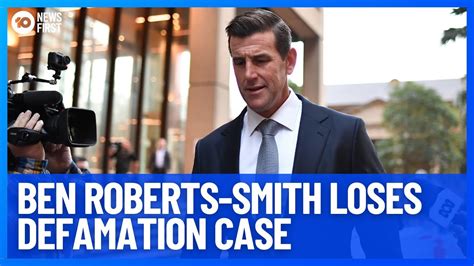

Ben Roberts-Smith damaged his reputation by suing

            Sometimes, though, it’s better not to send a draft. You might want to surprise them. If they know about your text, they might apply to a court to prevent publication, put pressure on your employer, or make damning comments about you on social media, prejudicing your audience before they hear your viewpoint.

            To decide what to write and whether to send a draft, you need to have a sense of the other person’s thinking and behaviour. Are they rational or driven by emotion? If they are driven by emotion, they might sue even though they have no chance of success, just to cause you pain.

Assess your vulnerabilities

Usually, you want to avoid legal action, because it’s expensive even if you win, chews up vast amounts of your time and energy, and can be incredibly stressful. Relax – a bit – because if someone threatens to sue you, most likely nothing further will come of it. Many threats turn out to be bluffs.

            The next step is that you might receive a letter from a solicitor, called a letter of demand or a concerns notice. If you’ve already published comments, the letter might ask for a retraction and apology, and a payment. If you haven’t yet published anything, it might threaten legal action if you do. Even when you receive a letter like this, usually it doesn’t go any further. But sometimes you receive a writ, a court document initiating legal action. That’s more serious and you should seek legal advice. If you haven’t before, it’s time to learn more about defamation law.

            But even when you receive a writ, it’s unlikely you will end up in court. Many cases are dropped by the plaintiff. Others are settled.

            It’s unlikely that you ever want to get this far. Maybe you’re wealthy and don’t mind losing a lot of your money. Otherwise, going to court is no fun, and often only the lawyers come out ahead.

            However, it’s good to be prepared for the worst, so you can make sensible decisions about risking legal action. How much money do you have? Can you afford to lose it? Are others, for example children, dependent on your support? The more you have to lose, the more cautious you need to be.

            Ironically, you are best placed if you have few assets. If you lose in court, you could go bankrupt, but the person who sued you will get little or nothing because you can’t pay. That means they should be more reluctant to sue, because it’ll cost them a lot of money with little chance of getting any of it back.

Plan ahead

If you think you’ll be at risk of being sued, one option is to divest yourself of assets, so you’re a less attractive legal target. For example, you can put your house in your partner’s name, give your savings to a trusted friend who will help you when needed, and otherwise limit your financial vulnerability. You need to do this well in advance, several years, otherwise it might seem you are trying to avoid paying a specific debt.

            Another option is to find someone to speak out on your behalf, to be the author of your damning claims. Who would want to take this risk for you? Ideally, it is someone with no assets and little income, perhaps living on a modest pension. Or it’s someone living in another country who cannot easily be affected by a legal action in Australia.


Bruce Lehrmann hurt his reputation by suing

Prepare for backfire

Defamation law is supposed to be about protecting people’s reputations. The idea is that harming someone’s reputation by making unfounded claims will be penalised by payments, and that the risk of a defamation suit will deter people from making such claims.

            The trouble is that defamation law doesn’t work well to protect reputations, and sometimes suing for defamation can hurt your reputation — it can backfire. Imagine that a major newspaper publishes an article about you filled with false and misleading claims. So you decide to sue the newspaper. Big problem. The newspaper now publishes article after article about every stage of your legal action, recounting the original defamatory claims each time, which it can do safely because it’s reporting factual material. Even if you win in court (very unlikely unless you have plenty of money to run the case), your reputation is trashed by the publicity. That’s what’s happened in several high-profile cases, like solicitor John Marsden who won in court but further ruined his reputation.


John Marsden

            If you’re sued for defamation, you can turn this process against the suer by publicising everything that happens. You also need to publicise your good deeds and prestigious supporters, interpret the suit as censorship, and continue despite the danger. If you have a lawyer, you’ll need to ignore their advice not to say anything in public.

            When you’re sued, it’s counterintuitive to publicise it. The common reaction is to bunker down and prepare a legal defence. Nevertheless, a strategy of publicity can be potent. Sometimes it’s enough to make the suer back down. If they realise what’s happening — namely, that their threat to sue is actually harming their reputation — they may cut their losses by not proceeding.

            Trying to make legal action backfire is a risky strategy, but extremely potent when it works. If you ever get into this situation, you should study previous cases and use the insights from them to plan your own strategy.

Waiting for death

Robert Askin was a police officer who became a politician, rising to become premier of the state of New South Wales for a decade, 1965–1975. He was knighted for his services to Australia.


Sir Robert Askin

            Shortly after he died in 1981, an article appeared in the newspaper The National Times titled “Askin: friend to organised crime.” It documented Askin’s role in the rise of criminal activity in the state during his time as premier. Journalists knew all about this at the time, but never published anything because of the likelihood that Askin would sue.

            In Australia, the dead cannot sue for defamation, and neither can relatives on behalf of a dead person. It means that after someone dies, you can say anything you like about them with no legal risk. After Askin died, it was legally safe to sully his public reputation.

            If there’s something you want to say about someone and you don’t mind waiting, death provides an opportunity to say it. I’ve written an article about someone — a police officer, actually — who, years ago, threatened to sue over a colleague’s statements in a newsletter I edited. My article about this saga is ready to go. Every year, I check obituary columns to see if he’s still alive. One of these years, when I discover he has died, I’ll publish the article on my blog.

            There’s another possibility: I might die first. That’s not ideal for me, but it does mean I won’t be worried about defamation suits. I can arrange for the article to be automatically posted on my blog. Another option is to put the article on my website and ask a friend — in another country, just to be safe — to circulate the URL in the event of my death.

Conclusion

The risk of being sued for defamation can be worrying. It’s safer to say nothing at all! Actually, though, the risks are small and manageable if you take precautions. The chance that you’ll unexpectedly be taken to court and lose a lot of money is almost zero. There will be warnings along the way.

            The first and most important step is to be careful about what you say and write. If you are prone to sending out serious accusations — “He’s a liar and a thief!” — you are asking for trouble. Make sure what you say is accurate and, if you’re not sure, seek advice.
            There’s another reason to be accurate: your credibility. If you say things that are easily shown to be wrong or misleading, others will start to distrust you. It’s usually wise to apologise as soon as you realise you’ve made a mistake. A sincere apology can make a big difference to your credibility and bank balance.

            Despite the risks, you may feel the need to speak out on matters important to you and others. If so, seek advice from those who are experienced and knowledgeable. Assess your vulnerabilities, financial and emotional. Try to guess what those who might sue will do. See whether there are other, safer ways to get your message out.

            You may decide to publish no matter what. Fine. Sometimes nothing happens, and your worries gradually evaporate. And sometimes it turns out that no one cares about what you said anyway!

Brian Martin
bmartin@uow.edu.au

Campus sex — not always sweet

Imagine that you are an undergraduate, a young woman. In one class, you are in awe of the professor. He is so knowledgeable, erudite, wise, suave. And there’s more. He seems to take a special interest in your development. You meet — and become lovers.

            Is there anything wrong with this?

            Rose had a relationship with her professor, Samuel. After they parted and went their separate ways, she still cared for him, believed in him. She was tolerant of his next relationship, with Ellen, also an undergraduate, essentially a younger version of Rose herself. She got along with Ellen.

            But then Samuel parted from Ellen. When Rose found out about Samuel’s next lover, Sienna, it was different. Rose felt — what? Betrayed? Why was she so upset? And why did her relationship with Samuel, years down the track, now feel wrong?

            Rose’s story is one of several in a new book by Madison Griffiths titled Sweet Nothings. Griffiths had her own experience, as a student with her tutor, but she doesn’t dwell on it. Her book focuses on the experiences of four women who, as undergraduates, had relationships with their university teachers or mentors.

            Griffiths’ writing is so elegant, so evocative, that I find it almost unfair to write about it in prosaic terms. She does not so much tell each of the four women’s stories as give the reader a feeling for what it was like for them. This is an emotional journey into the hearts of young women smitten with academics, in a context where close relationships can turn out to be damaging.

            Griffiths, in pursuing her project, eventually made contact with well over a hundred women in similar situations. She chose just four to explore in depth in her book, but it is clear that she draws on what many more told her. They are all from Australian universities, especially in Melbourne. It’s easy to conclude that this is a widespread pattern across academia.

            Two other specifications are important. Griffiths focuses on consensual relationships, in which the young women agreed to, sometimes pursued, close personal connections with professors. She sets aside the problems of sexual harassment and assault, which are crucially important, to address a much thornier issue, something legal yet problematic. Most of the relationships she came to know about were sexual, aside from one better termed romantic, but which raises similar concerns.


Madison Griffiths

            So what is wrong with close personal relationships between consenting adults, one an older and accomplished man and the other a young female student? Griffiths provides an answer that emerges from the stories of Rose, Cara, Elsie and Blaine. The problem is the impact of these relationships on the women. They came to university to learn and looked to their teachers for guidance on their intellectual journeys. As Griffiths bluntly puts it, “no student goes to university to fuck their professor.” The women’s intellectual journeys were hijacked as they were turned into bodies for the gratification of senior scholars. And not just bodies. The men who groomed them were also inside their minds, not in a helpful way.

            Griffiths provides context by describing the women’s encounters — and her own — with teachers in high school, and by telling about occasions in which teachers behaved as she thinks they should, helping and taking care not to exploit. These examples provide telling contrasts with the stories of relationships that seemed alluring yet became debilitating.

            Griffiths learned the names of the male academics involved and followed them online, but did not pursue interviews. She discovered that despite damaging the lives of the young women ostensibly in their care, the men seemed to have suffered little or no detriment in their careers. A few of the women, after deciding they had been abused, submitted formal complaints to their universities. But so far as they could learn, nothing happened: their complaints disappeared into bureaucratic black holes.

Same story, a different angle

My involvement with these issues has been quite different. It provides a more banal perspective than Griffiths’ elegant investigation into emotions and meanings.

            In the early 1980s, I first heard about sexual harassment — including intellectual grooming and exploitation — and then joined the sexual harassment committee at the Australian National University when it was set up in 1984. On moving to the University of Wollongong in 1986, I joined its newly formed sexual harassment committee. For years, we focused on sexual harassment, writing articles and giving talks. Then, in 1990, there was a thunderclap. Two students accused a tutor of rape, and the Vice Chancellor released a statement warning about staff-student relationships. (The tutor was convicted and went to prison.)

            Our committee decided to look at staff-student sex. We proposed a register of staff-student relationships, causing a great stir on campus, with much opposition expressed on an early electronic forum. As part of our efforts, we produced a four-page leaflet on staff-student sex and I wrote an article published in The Australian.

            Back then, we saw the problems as falling into two categories: conflict of interest (COI) and abuse of trust. COIs arise when a person making academic decisions has a close personal relationship with someone affected. Griffiths’ stories contain many examples, such as when a teacher marks the work of a student or gives them a recommendation. But some staff-student sexual relationships do not involve a COI. One of my colleagues taught a class in which her husband was a student; she was careful to ensure that he was not in her tutorial and marked none of his work. In other cases, staff and students from different parts of the university have relationships where COIs do not arise.

            So far, so good. But there was something else, less easy to pin down: abuse of trust. As we described it, “An abuse of trust occurs when the trust associated with a professional relationship is destroyed through actions, or requests for actions, of a non-professional nature.”

            Several others on our committee were aware of egregious examples, such as the lecturer who had been in a new relationship with one of his undergraduate students every year or two for decades. We knew of young students who dropped out of their studies after a relationship like this broke up.

            Abuse of trust is at the core of Griffiths’ concerns. On our committee, we had an inkling of how this affected students. Griffiths has provided a guide deep into the emotions of students who fall in love with their teachers and learn to regret it or become ambivalent, who are deeply and complexly damaged.

            At the University of Wollongong, administrators implemented a policy on close personal relationships, focusing on COIs. Abuse of trust is hard to police. And a policy does not do much to affect behaviour unless there is publicity and agitation, of which there has been little.

            Our committee was technically a sub-committee of the Equal Employment Opportunity Unit, a small group with usually one undergraduate, one postgraduate and two academics in addition to two professional staff from the EEO Unit. The others on the committee had many more stories to tell than me, and I learned a lot. A few years later, a new head of EEO abolished the sub-committee, ending our efforts. After this, trying to organise a group proved difficult. Cut off from well-connected colleagues, I knew little about whether behaviours had changed. Alas, from Sweet Nothings, it is apparent that COIs and abuse of trust have continued to plague universities.

            Even back then, over 30 years ago, I was sceptical of policies and procedures providing a useful response. The key, I thought, was greater awareness. In subsequent research, I found evidence that formal procedures, what I call official channels, often serve to dampen outrage from injustice. And that is just what the women reported to Griffiths. Their complaints disappeared into a procedural swamp, and the offending academics went unscathed, their careers unimpeded.

            Instead of turning to official channels, with their false promise of justice, a more effective response is to mobilise support, raise awareness and form coalitions. Griffiths has done much along these lines by talking with so many women ensnared by professors who let their urges overwhelm their professional obligations. And she has done an inestimable service by giving voice to the women’s feelings, and her own, in Sweet Nothings.

Brian Martin
bmartin@uow.edu.au

Thanks to Marina Granato, Julia LeMonde and Erin Twyford for useful comments.

Judges and sexual harassment

Is Dyson Heydon, a former justice on the High Court, a serial sexual harasser? Maybe so, but there is more to consider: abuse of trust, outrage management techniques and official channels.


Dyson Heydon

Abuse of trust

In 1986, I joined the newly formed Sexual Harassment sub-committee at the University of Wollongong. Its aim was to oppose sexual harassment on campus. It was a sub-committee of the committee overseeing the Equal Employment Opportunity (EEO) unit. We were a small group, with members from the EEO unit, academics, research students and undergraduate students. We developed policy proposals, produced leaflets and held stalls at Orientation Week.

Some members of the committee, through their contacts, knew about harassment on campus. Hardly any students were willing to make formal complaints, which didn’t come to our group anyway. But EEO staff knew about patterns, and some other committee members did too.

For example, we heard that a particular lecturer was making unwelcome advances to undergraduate students, none of whom wanted to make a formal complaint. On the committee, we discussed options. We couldn’t approach, much less accuse, the lecturer, as that would violate the students’ confidentiality. We talked about putting graffiti in the women’s toilets. In the end, the EEO Officer decided to offer a workshop on sexual harassment to the entire faculty. In this way, we hoped, the message would get to the lecherous lecturer and his colleagues.

            In 1990, something happened that broadened our concerns. Two undergraduate students accused a man of rape. It turned out that the man, a PhD student, was their tutor in one of their classes. He later went to prison for rape. The Vice-Chancellor put out a statement raising concern about individuals who abuse their “positions of privilege” in relation to students who “may feel their academic progress depends upon compliance with the wishes of a staff member or members.”

On our committee, we took this on board and started investigating the issue of consensual sexual relationships between teachers and students. There were two main problems. One was conflict of interest. If a teacher had a close personal relationship with a student, then the teacher would likely be biased when marking the student’s work. Even if not, there might be a perception of bias.

The solution for conflict of interest is often straightforward. One of my colleagues was married to a student in her class. The relationship was known, and arrangements were made so that he was not in her tutorial group and she had nothing to do with any of his assignments.

However, we learned of cases in which such conflicts of interest were not addressed. In one instance, which I learned about years later, a senior academic was a supervisor for his wife, who was doing a PhD.

The second main problem with close relationships between staff and students was abuse of trust. One of the members of our committee knew of a male colleague who started a relationship with an undergraduate student in his class every year or two. The students who were dumped along the way were often distressed. Some dropped out of university.

Teachers are in a position of trust with students, trust that they will support and nurture their students’ knowledge, understanding and skills. Students often look up to their teachers as experienced and knowledgeable, sometimes even in awe. When a teacher uses this position of authority and status to cultivate a sexual relationship, it undermines the expected professional relationship: it abuses the trust implicit in the teacher-student relationship.

Unlike sexual harassment, abuse of trust isn’t illegal. However, it can be just as damaging.

            In learning about this sort of abuse of trust in university settings, one of our committee members came across a book by Peter Rutter titled Sex in the forbidden zone. The book’s subtitle listed several of the possibilities for abuse: When men in power — therapists, doctors, clergy, teachers and others — betray women’s trust. There is an implicit trust that a doctor, lawyer, teacher or boss will look after the interests of their patient, client, student or subordinate. In each case, there is a possibility of abuse of trust when the person with greater authority uses their position to promote a sexual or romantic relationship.

Heydon, as a judge, obviously was in a position of much greater authority than his associates. For him, or any other judge, to use their position to seek a sexual or romantic relationship is an abuse of trust.

In some cases, such relationships are consensual. A student might welcome, desire or even seek a sexual relationship with their teacher. Sometimes this works out well, leading to long-lasting relationships. However, there is still a serious risk of abuse of trust, as we learned from stories we heard on our committee. The solution for teachers is straightforward: if you want a close personal relationship with a student, wait until they’re no longer in your class or in any way subject to your authority or influence.

Imagine, for the sake of argument, that one of Heydon’s associates welcomed his advances and began a relationship with him. That would be a legal, consensual relationship, not harassment — and it would still be wrong. It would probably involve a conflict of interest and most likely an abuse of trust. In such cases, the onus is on the judge not to initiate such a relationship. Indeed, if an associate took the initiative, the judge should refuse.

Sexual harassment: outrage management

Years after being on the sexual harassment sub-committee, I started studying what happens when a powerful individual or group does something that others think is wrong. An example is the 1991 Dili massacre, when Indonesian troops shot and killed hundreds of peaceful protesters in East Timor’s capital city. Another example is the beating of Rodney King by Los Angeles police, also in 1991.


Still from George Holliday’s video of the beating of Rodney King

In these and many other instances, the perpetrator and allies use a variety of methods to reduce public outrage. They cover up the action, devalue the target, reinterpret the events by lying, blaming and reframing, use official channels to give an appearance of justice, and intimidate or reward people involved.

This dynamic applies to sexual harassment. Greg Scott and I examined the techniques used when Anita Hill alleged that Clarence Thomas, a nominee for the US Supreme Court, had harassed her years before.


Anita Hill

Greg and I found evidence of all of the usual techniques to reduce public outrage. For example, after Hill went public, she was the subject of a massive campaign of denigration, including publication of a book, The Real Anita Hill, filled with lies and derogatory material. (The author later recanted.) Thomas reframed Hill’s allegations as part of hearings that were a racial assault on him.

Paula McDonald at the Queensland University of Technology led a study of sexual harassment using this framework, examining testimony in court cases about sexual harassment. Court transcripts revealed that the same techniques were used in case after case.

For years, Heydon paid no penalty for his actions. The primary technique to reduce public outrage was cover-up. Heydon of course didn’t publicise his actions, but neither did others who knew about them. Many of them were afraid to say anything because they were worried about repercussions, for themselves rather than Heydon: their careers might be damaged. This is the technique of unspoken threats, a type of intimidation.

It is possible to counter the techniques that reduce outrage from injustice. The counter-methods are exposing the action, validating the target, interpreting events as unfair, mobilising support and resisting intimidation and rewards. These are the methods that made the Dili massacre, the beating of Rodney King and the sexual predation of Harvey Weinstein counterproductive for the attackers.

In Heydon’s case, outrage was stoked most of all by the breakthrough stories by journalists Kate McClymont and Jacqueline Maley. The stories were enabled by women willing to tell their stories. This was the counter-method of exposing the action.

            In the exposure, the women harassed by Heydon were given respect. In the coverage, they were presented as credible and as talented, conscientious individuals. This was the counter-method of validating the targets.

In the exposure, the events were portrayed as harassment and as wrong. This had particular resonance in the Heydon case because of his symbolic status as a high-level representative of justice and as a self-styled pillar of moral rectitude. This was the counter-method of interpreting events as unjust.

The coverage was enabled by women willing to come forward and tell their stories. The #MeToo movement was instrumental. It triggered a mobilisation of support for targets of harassment and assault.

Finally, several courageous women were willing to go public with their stories, despite the possible damage to their careers and reputations. This was the counter-method of resisting intimidation.

The exposure of Heydon’s harassment thus shows the relevance of all the counter-methods commonly involved in challenging a powerful perpetrator of something deemed wrong.

Official channels

In my just-published book titled Official Channels, I describe my experiences learning about the shortcomings of processes and agencies such as grievance procedures, regulatory bodies, ombudsmen, anti-corruption bodies and courts. Most of the workers in watchdog bodies are doing their best, but the system has inherent shortcomings.

One of the chapters in Official Channels is about sexual harassment. In Australia, like other countries, sexual harassment was a long-standing problem that came on the public agenda due to efforts of feminists. The main response has been setting up of laws and procedures to deal with the problem, but often these only give an illusion of protection. Decades later, sexual harassment and sexual assault remain serious problems.

After Heydon’s harassment was revealed to the public, the first response in many cases was to say that better processes are needed to deal with it. This is nearly always the number-one response. But why would better processes work now when they haven’t before? Furthermore, many of Heydon’s actions involved an abuse of trust, and there is no rule against abuse of trust.

I’m all in favour of more effective regulations, laws and watchdog bodies, but there’s a danger in thinking that this is enough. Several other options are neglected by comparison.

One important option is improved skills. Imagine that those around Heydon had been better prepared to expose and counter his behaviour. This doesn’t just mean the women he targeted, but others too, so-called bystanders, especially those who heard about his actions. Skills against sexual harassment include putting graffiti in women’s toilets — and in men’s toilets. They include being able to use anonymous remailers and set up secure websites. They include being able to make covert recordings, and being able to document events and convey them powerfully to others.


Martha Langelan’s book offers excellent practical advice

            This might sound like putting the onus for action on the target, in effect blaming the victim, but just as much onus needs to be put on others to provide support and take action. Bystander training is valuable in skill development.

Another important option is changing the culture. The legal profession is highly hierarchical, with judges at the apex. A more egalitarian system would reduce the power of elites, empower those lower down and enable stronger challenges to abusers.

Changing the culture might also mean changing expectations so that associates are treated as professionals rather than as personal assistants. It might even mean getting rid of the role of associates altogether, providing support for judges in other ways.

The point here is not to provide a blueprint but to note that there are options besides official channels. Improving skills and changing the culture might not be easy but they show quite a bit of promise, especially considering the failure of decades of official concern about sexual harassment. It is revealing that if official channels were effective, there would have been no need for the #MeToo movement — or for investigative journalists to expose people like Dyson Heydon.

Brian Martin
bmartin@uow.edu.au

Thanks to Sharon Callaghan and Qinqing Xu for valuable comments on a draft and to the many individuals over the years who have helped me learn about the issue of sexual harassment and what can be done about it.